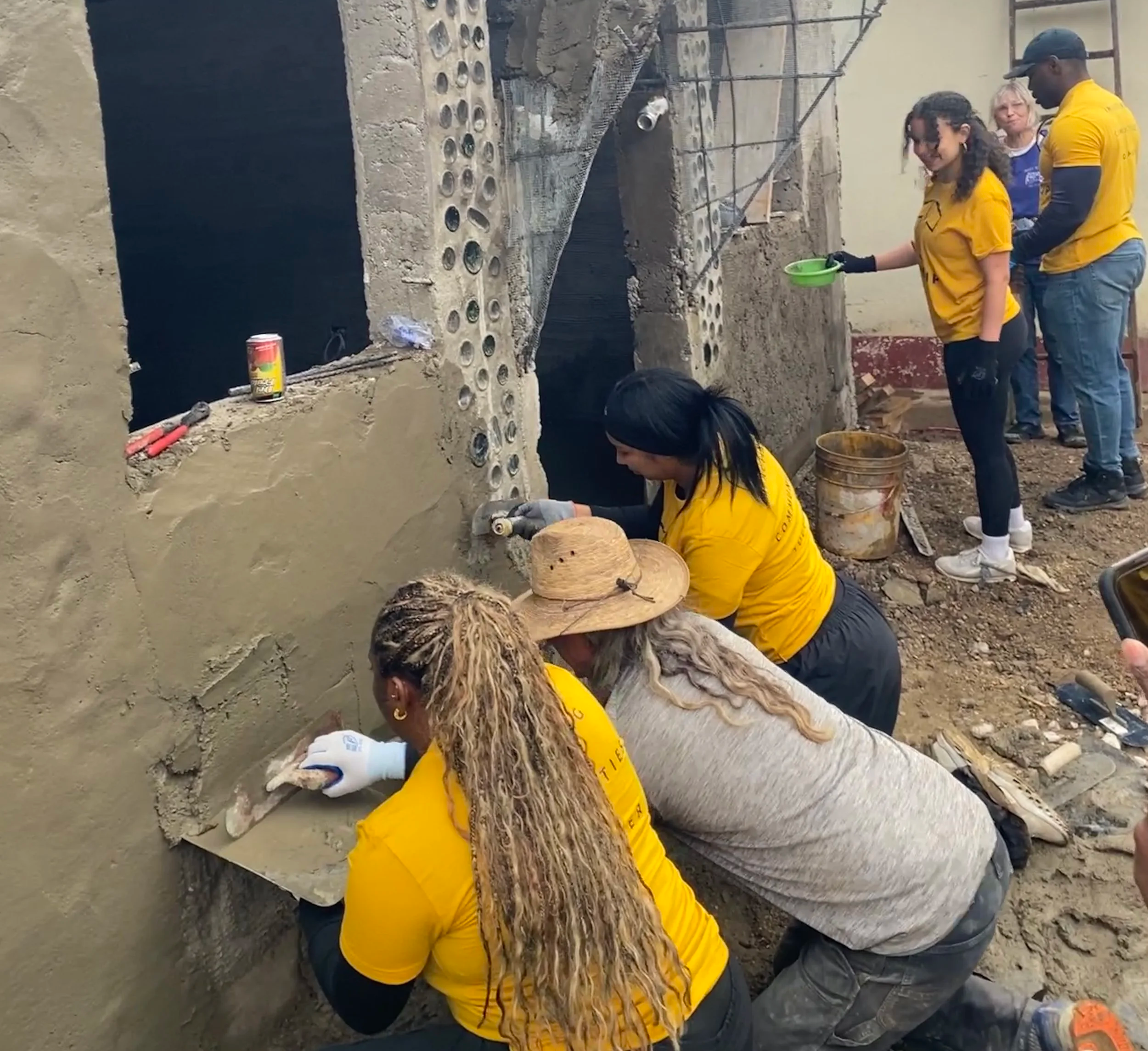
CLASSROOM BUILD IN PATZAJ, GUATEMALA 2025
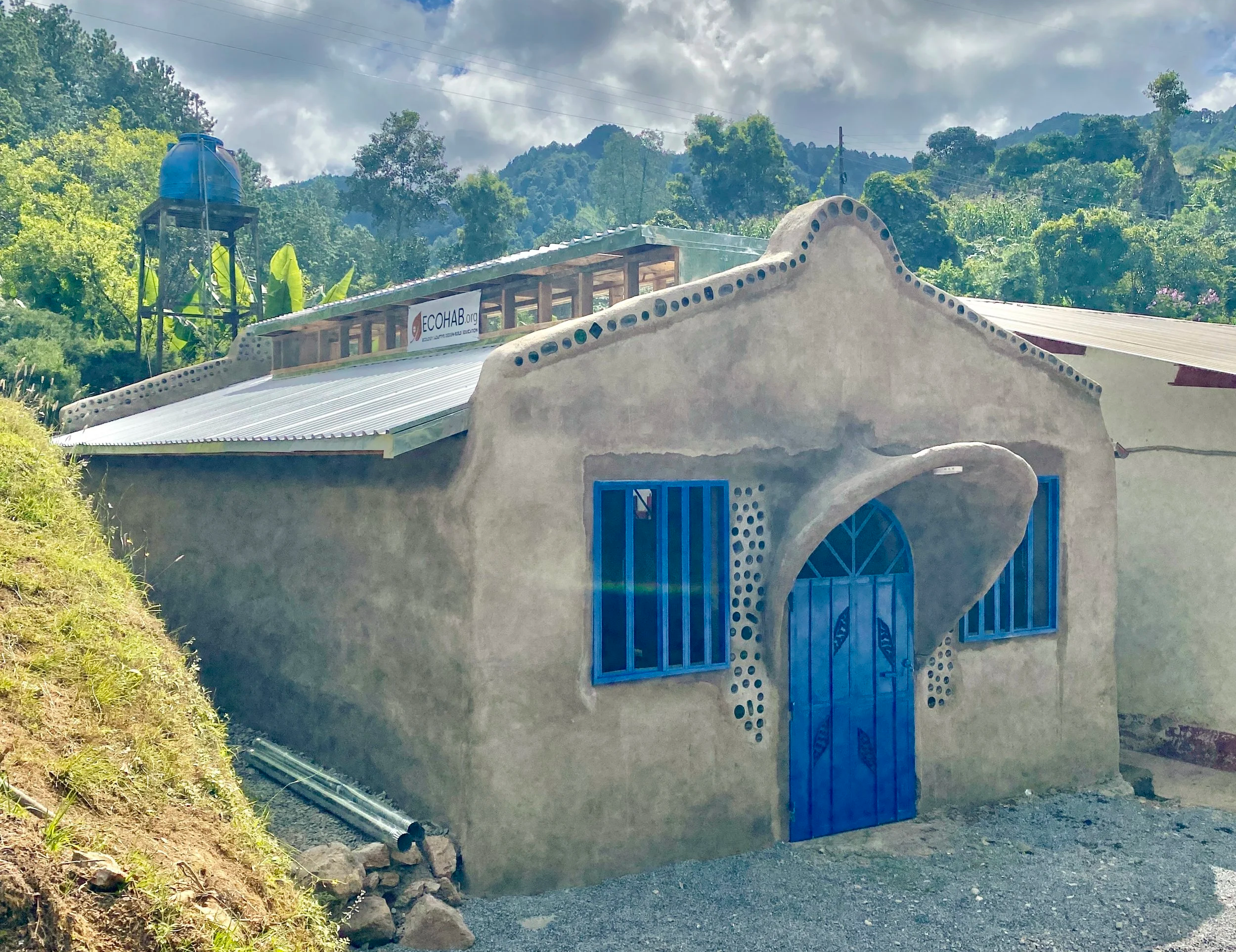
October 20th - November 14th, 2025, ECOHAB, in partnership with nonprofits Long Way Home and Team Up, built a passive solar classroom in the rural Maya Kaqchikel village of Patzaj (near San Juan Comalapa) to address severe shortages of educational infrastructure. This classroom design is adapted to the local climate and includes solar-powered electricity, temperature control, and incorporates natural and recycled materials.
THE TEAM
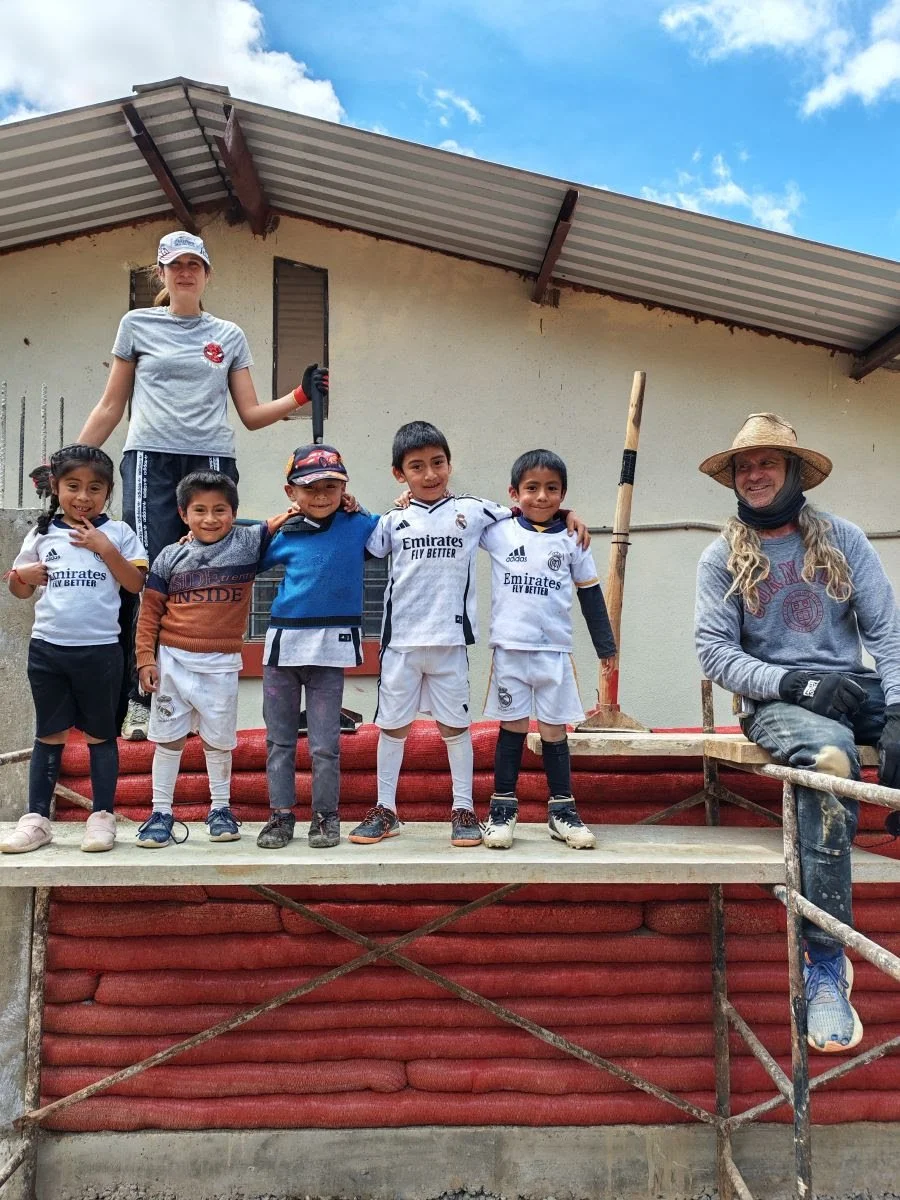
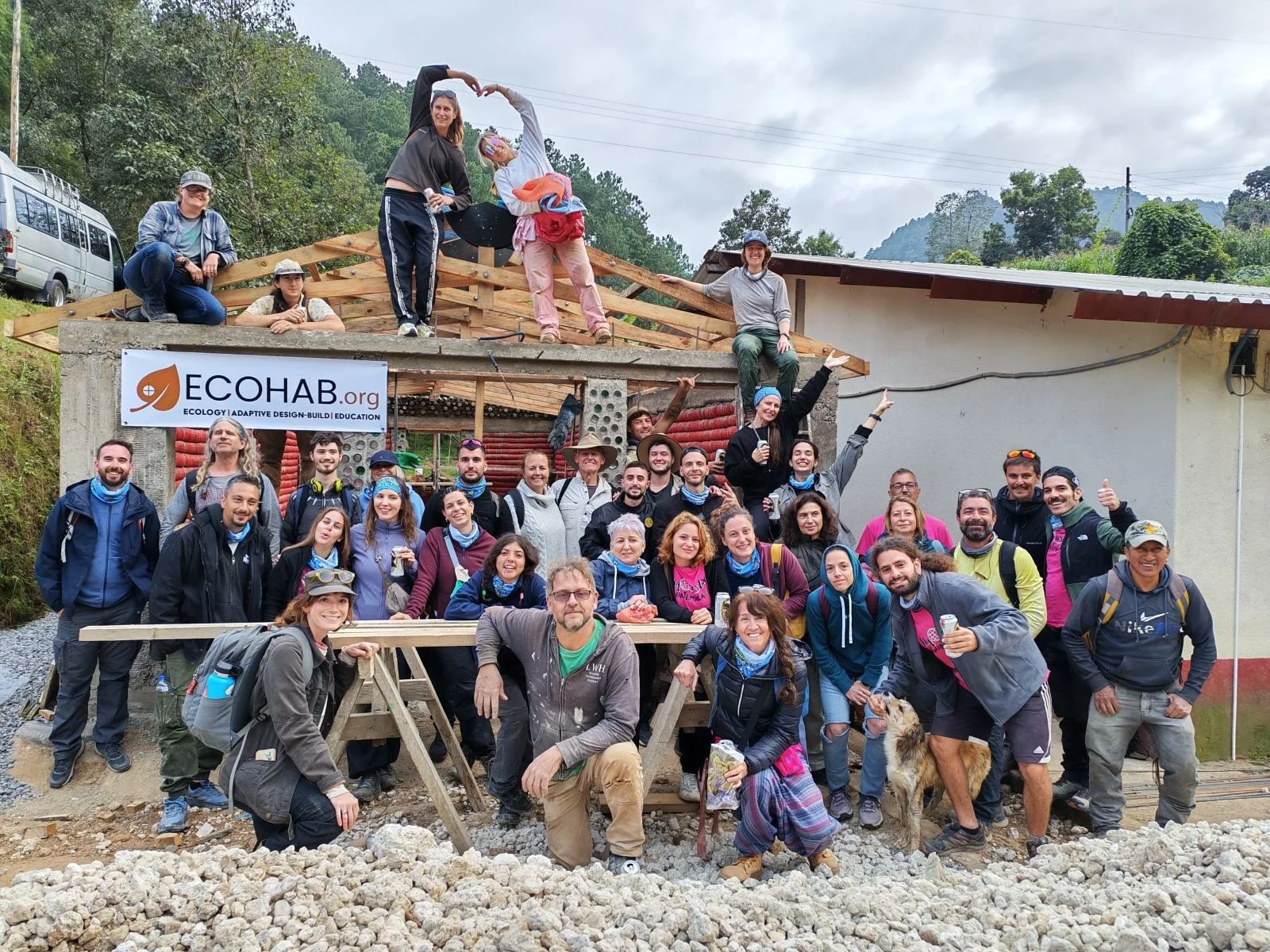
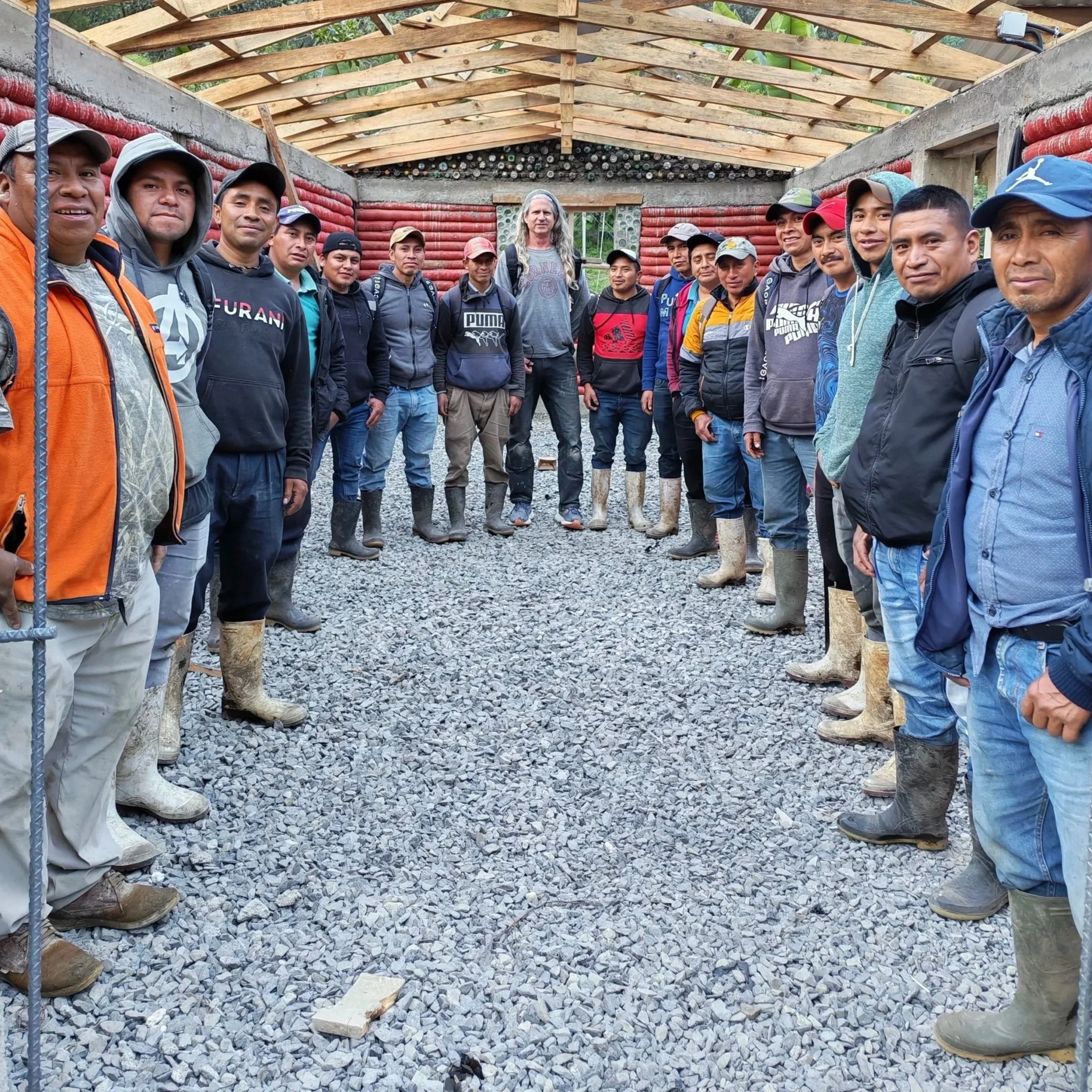
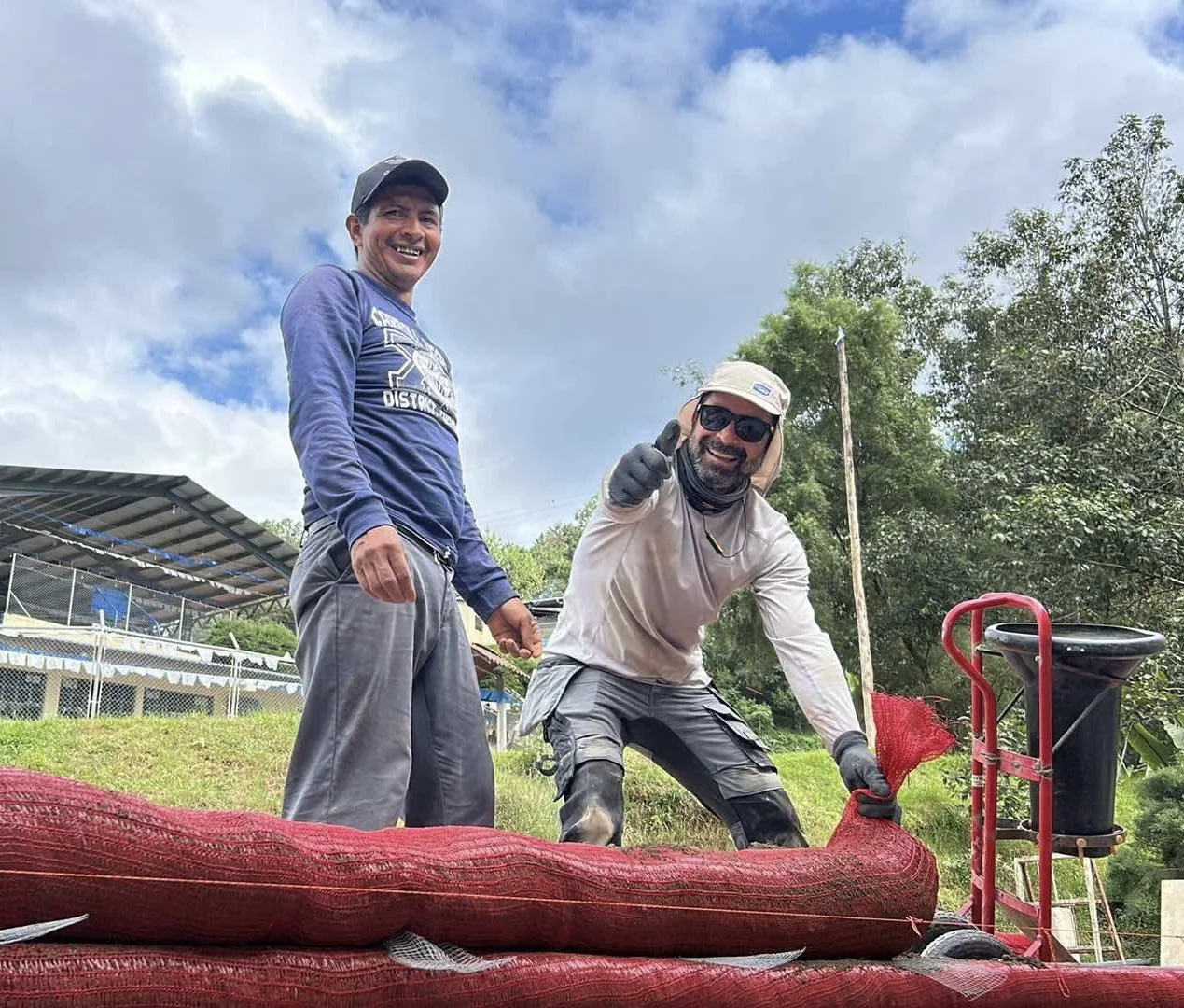
ECOHAB brought a crew of 10 builders whom volunteered their time and expertise. We had additional help from ECOHAB workshop participants, Long Way Home volunteers, Wheeling 2 Help volunteers, and the Team Up crew. We had people from four different global continents help to build this classroom start-to-finish in only four weeks. There was always at least two locals working with us every day.
Long Way Home gave us boots-on-the-ground connections, prep-work, and extra volunteers. Team Up helped us immensely by fundraising for the building materials and donating a week of their time to volunteer. We are grateful for our partners and volunteers!
WHY BUILD A CLASSROOM IN GUATEMALA?
In the rural Maya Kaqchikel village of Patzaj, just north of San Juan Comalapa, families wake before sunrise to work in agriculture fields. Kids, that are able, attend class for five hours and then return home to assist in the fields until nightfall. Education, though deeply valued, is often out of reach—not just due to poverty, but because there simply aren’t enough schools.
The village of Patzaj is home to about 300 families, most of whom are Indigenous Maya Kaqchikel, a group that makes up 97% of the population in San Juan Comalapa. Like many Maya communities in Guatemala’s Western Highlands, Patzaj is still living with the intergenerational impacts of systemic oppression. After centuries of colonial exclusion and a 36-year civil war that left over 200,000 dead (83% of them Indigenous Maya), access to basic services—like education and clean water—is still deeply unequal.
While public education is technically free through grade six, many children drop out to help support their families. Girls face even greater obstacles due to gender norms, safety concerns, and the lack of culturally relevant, multilingual education. There simply aren't enough schools to serve every child, and in places like Patzaj, space is especially limited.
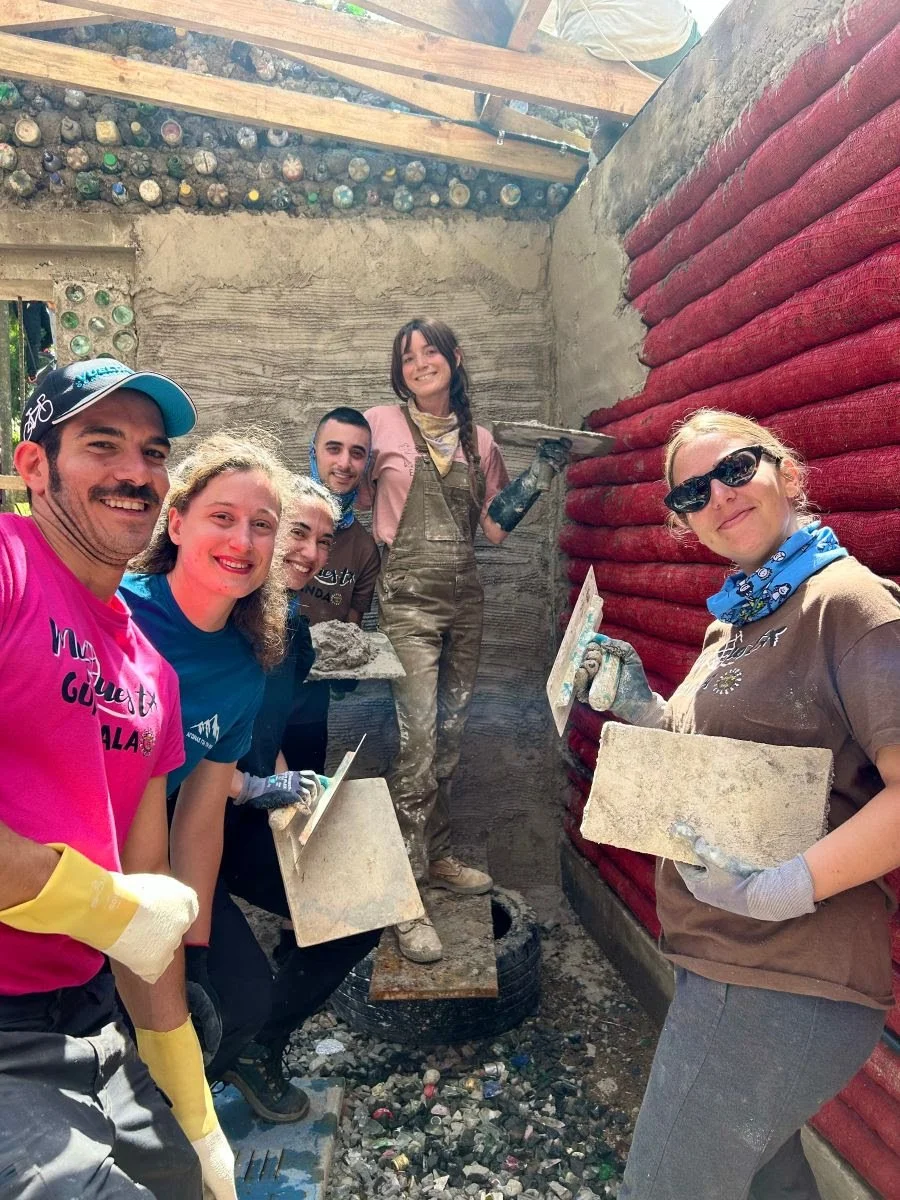
On day one, Hector, the Mayer of Patzaj, greeted us alongside 20 other locals to go over the classroom design and overall plan for the following four weeks. A traditional ceremony was conducted after the agreement of the design. The locals of Patzaj not only welcomed us with ceremony and meals, but they also built with us every step of the way. The locals of Patzaj will be painting the exterior white after the plaster has enough time to dry completely.
Thanks to our donors, we were able to purchase and install a solar electric system that is independent from the grid.
MATERIALS
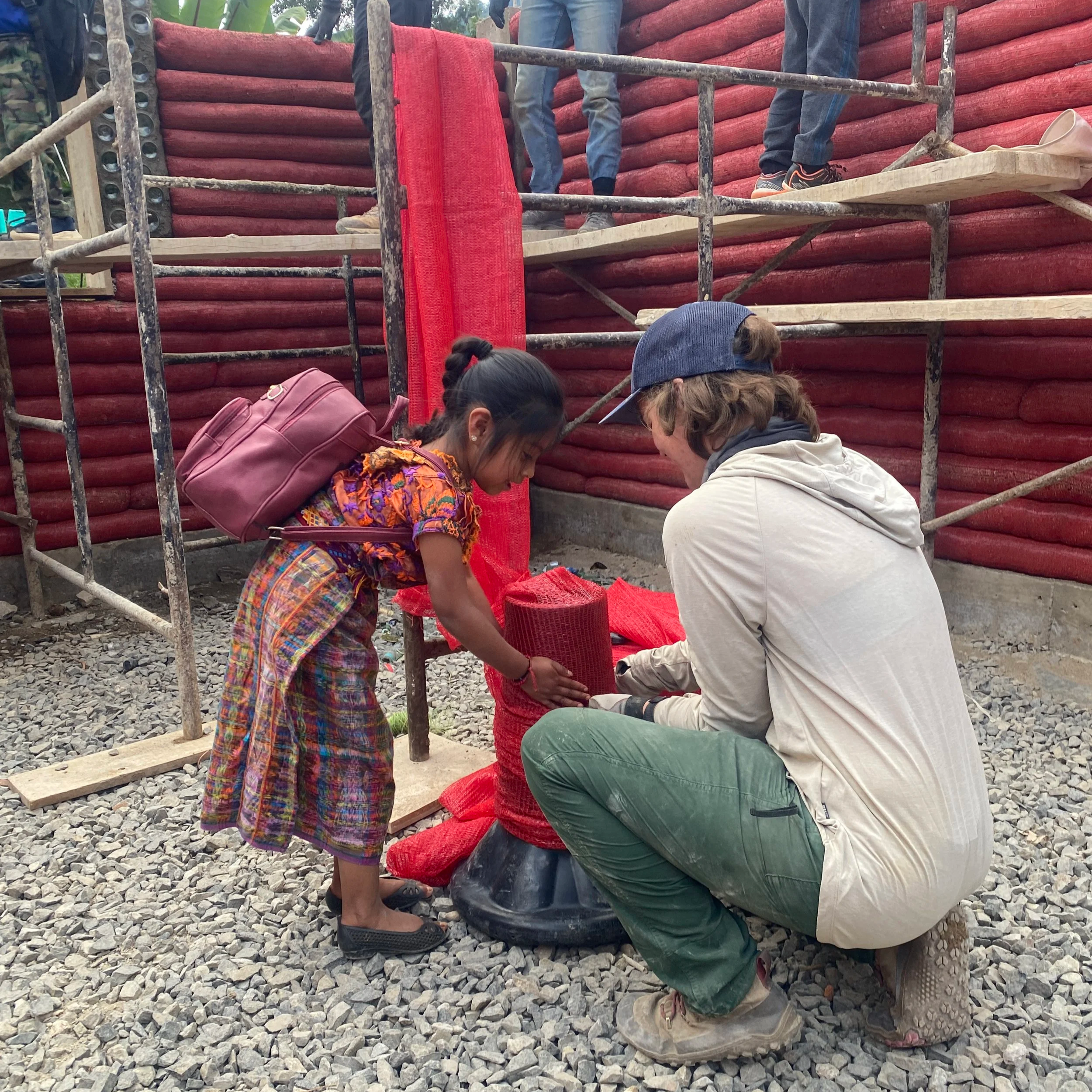
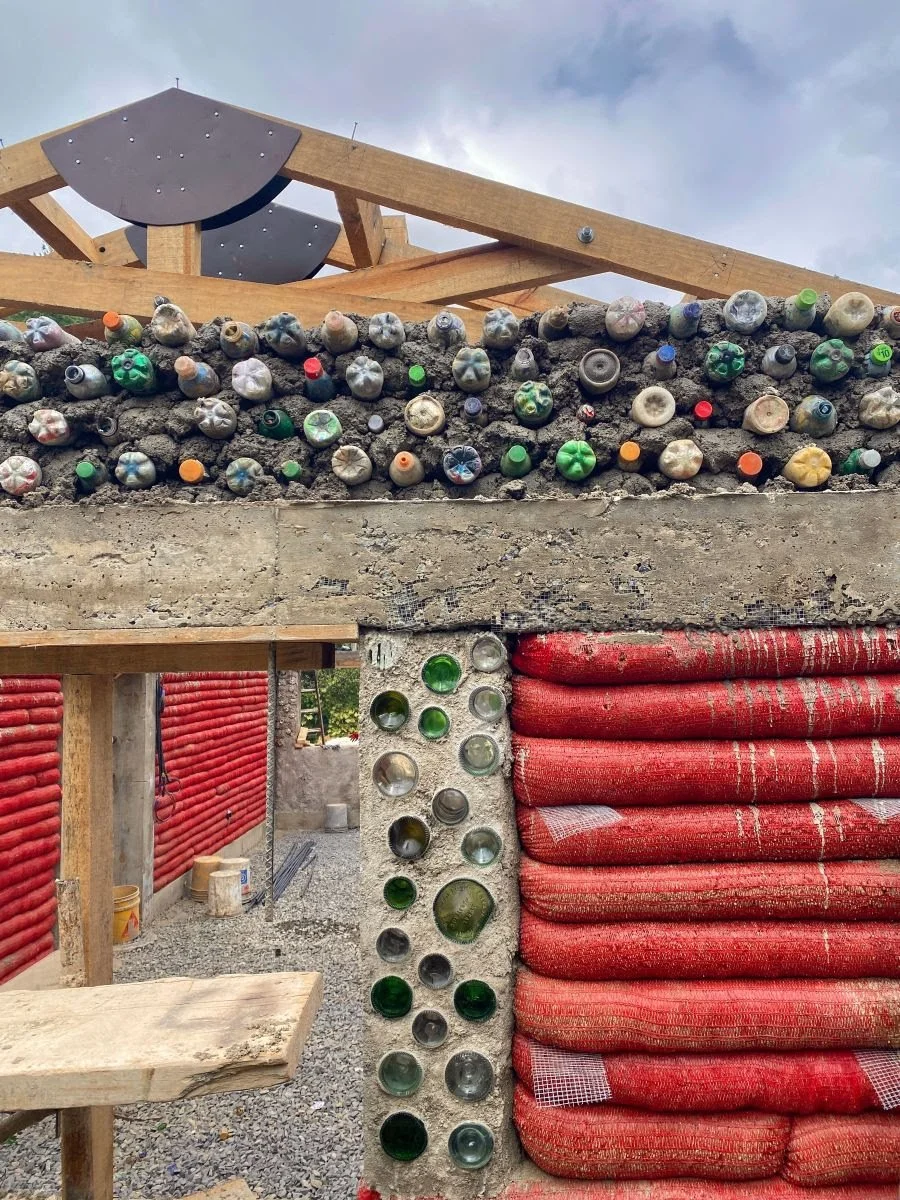
This building incorporates the following materials: hyperadobe, pumicecrete, glass bottles, ecobricks (plastic bottles filled with plastic waste), aluminum cans, automobile tires, concrete columns and beams, scissor trusses made on site, interior lime plaster, exterior cement plaster, and more!
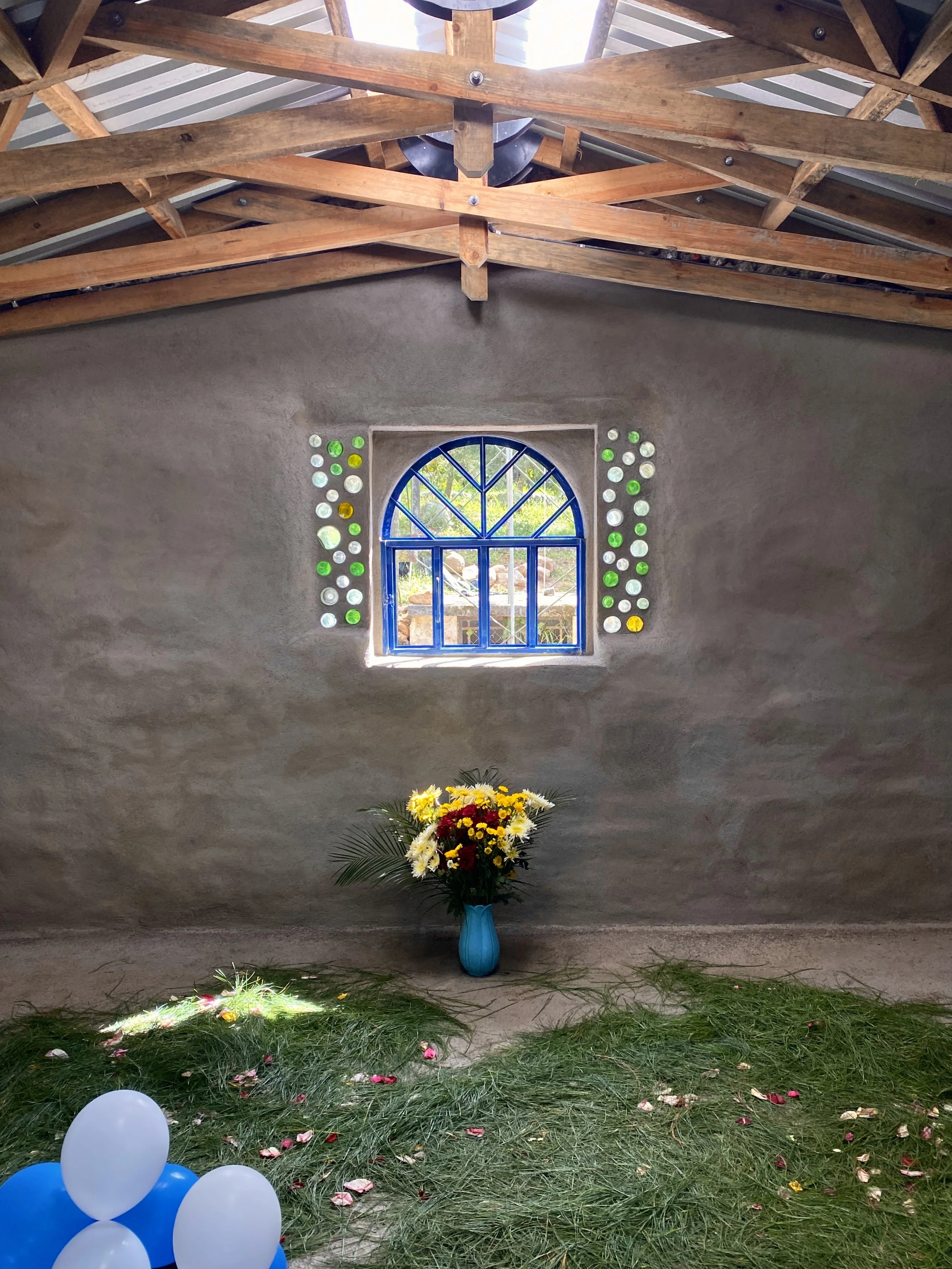
Watch our 2.5 minute timelapse building this classroom start-to-finish!
EXPERIENTIAL LEARNING
Pairing theoretical learning with hands on experience forms the academic backbone of ECOHAB. Students and volunteers are constantly learning throughout each project with a special emphasis put on learn it/do it. In the field examples, lectures and hands on experience allow everyone to live the theory and practice what they are learning.